
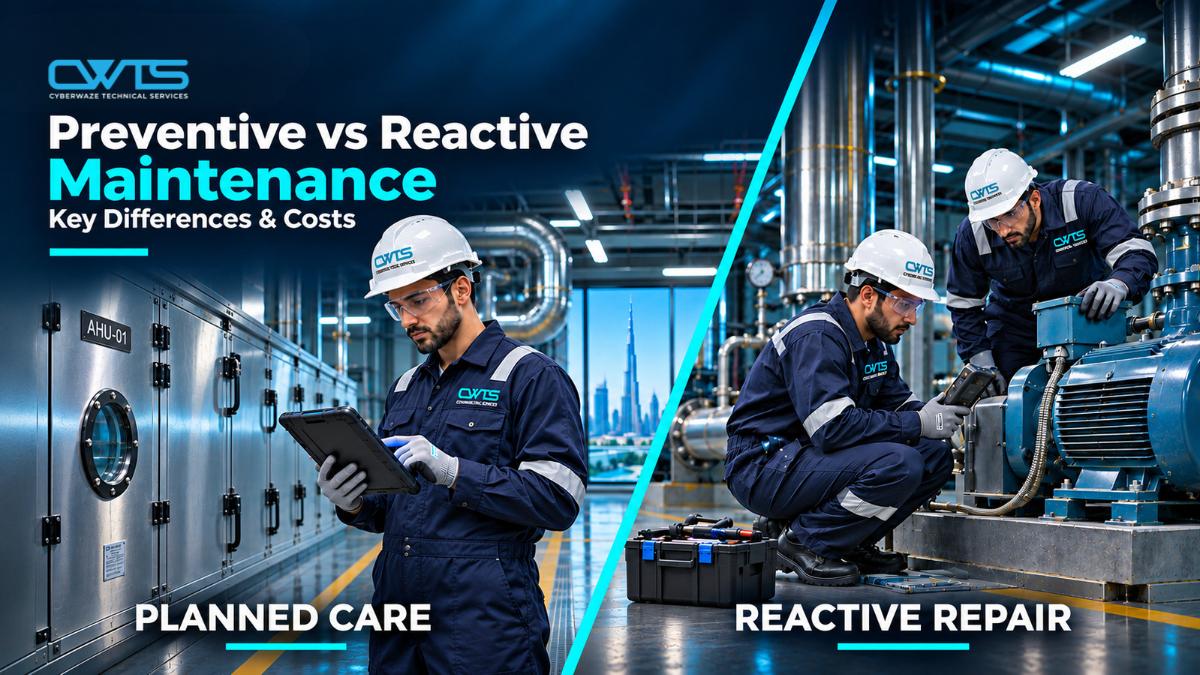
Preventive vs Reactive Maintenance – Key Differences and Costs
Are you spending more on unanticipated property repairs than you organized? Do you know whether Preventive vs Reactive Maintenance is the better choice for your building?
Preventive maintenance identifies potential problems before equipment breaks down, while reactive maintenance focuses on repairing faults after they happen. Understanding both approaches helps property owners manage repair expenses, reduce equipment downtime, and protect valuable building assets.
In this article, we will explain the key differences between preventive and reactive maintenance, compare their price, and inspect their benefits and disadvantages. You will also find practical examples and a preventive maintenance checklist to assist you in selecting the right approach for your property.
What Is Preventive Maintenance?
Preventive maintenance is a planned maintenance policy that requires regular examination, servicing, and repairs to decrease the possibility of apparatus failure. Instead of waiting for something to stop working, maintenance professionals identify early warning signs and address them before they develop into expensive problems.
For residential and commercial properties, common preventive maintenance activities include:
- HVAC inspections: Checking filters, cooling performance, ventilation, and system components.
- Electrical inspections: Identifying damaged wiring, loose connections, and faulty fittings.
- Plumbing inspections: Checking pipes, drainage, water pressure, and visible leaks.
- Building inspections: Examining ceilings, walls, flooring, doors, and other structural components.
- Solar system maintenance: Inspecting panels, connections, and overall system performance.
The main purpose is to maintain equipment condition, minimise unexpected breakdowns, and support reliable building operations.
What Is Reactive Maintenance?
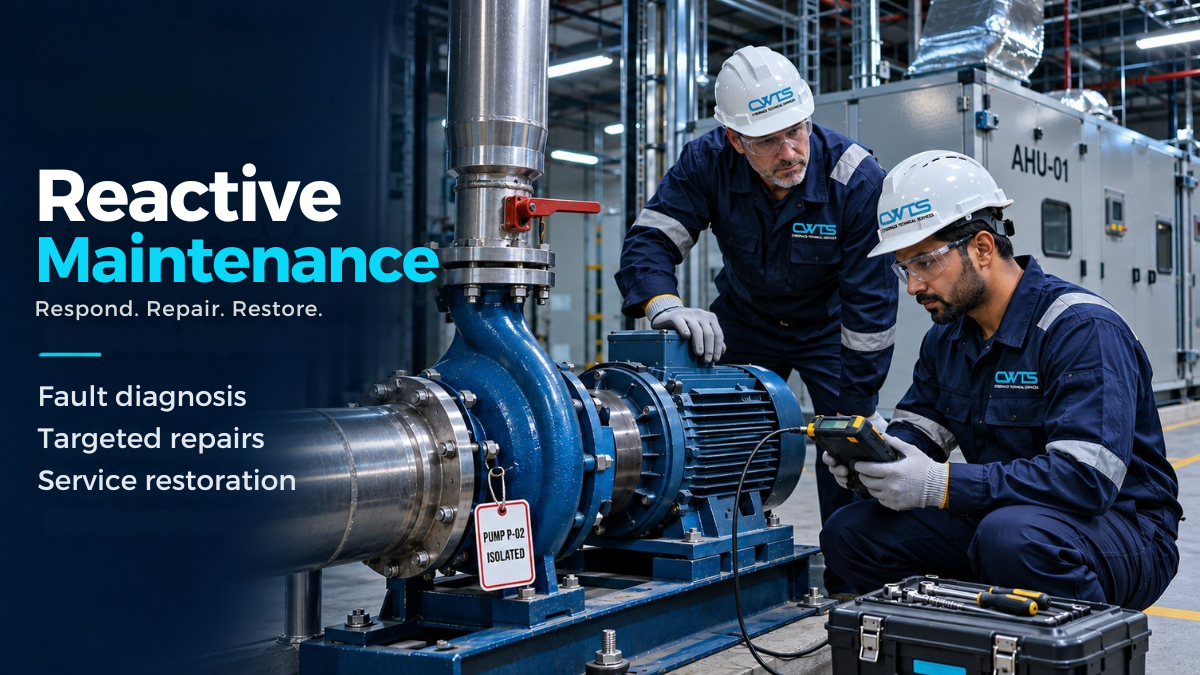
Reactive maintenance involves restoring equipment or building systems after a fault, malfunction, or failure occurs. It is also known as breakdown maintenance because action is taken when something stops functioning correctly.
For example, if an air conditioning system suddenly stops cooling, a technician is contacted to diagnose and repair the fault.
Other common examples include:
- Repairing leaking water pipes.
- Replacing damaged electrical switches.
- Fixing malfunctioning HVAC equipment.
- Repairing broken doors and windows.
- Addressing unexpected drainage problems.
Reactive maintenance can be active for non-critical equipment where failure does not generate remarkable safety risks or operational disturbance.
However, relying entirely on emergency repairs can make maintenance expenses unpredictable.
Preventive vs Reactive Maintenance: Key Differences
Both approaches aim to maintain building performance, but their methods, timing, and financial impact are different.
| Comparison Factor | Preventive Maintenance | Reactive Maintenance |
| Maintenance Approach | Planned and scheduled | Fault-based |
| Timing | Before equipment failure | After equipment failure |
| Main Objective | Prevent potential problems | Restore normal operation |
| Cost Planning | More predictable | Less predictable |
| Downtime | Usually planned | Often unexpected |
| Inspections | Regular inspections | After faults are reported |
| Repairs | Early corrections | Breakdown repairs |
| Equipment Condition | Helps maintain performance | May allow deterioration |
| Budget Management | Easier to forecast | Can require emergency spending |
| Best Application | Critical building systems | Non-critical or unexpected faults |
Which Is Better for Property Maintenance?
Preventive maintenance is generally preferable for essential building systems, particularly where equipment failure could affect safety, comfort, or business operations. Reactive maintenance is still necessary for unexpected faults and selected non-critical assets. A combination of both approaches allows property owners to maintain important equipment while keeping a response plan for unexpected repairs.
Preventive vs Reactive Maintenance Costs: What Should You Consider?
The cost of maintenance involves more than the amount paid to a technician. Property owners should consider labour, replacement parts, emergency charges, equipment damage, and operational downtime.
1. Preventive Maintenance Costs
Preventive maintenance involves planned expenses that can be included in a monthly or annual maintenance budget.
Typical expenses include:
- Scheduled HVAC servicing.
- Routine electrical inspections.
- Plumbing system checks.
- Replacement of worn components.
- Regular building inspections.
- Technician labour and maintenance materials.
Although these activities require ongoing investment, they can help identify faults early and reduce the likelihood of expensive emergency repairs.
2. Reactive Maintenance Costs
Reactive maintenance expenses arise when equipment or property systems develop unexpected faults.
These may include:
- Emergency technician callout charges.
- Additional labour costs.
- Urgent replacement parts.
- Major equipment repairs.
- Secondary property damage.
- Business interruption and operational losses.
For example, a small plumbing leak may initially require a simple repair. If left unnoticed, it could damage ceilings, flooring, walls, and nearby electrical components. The resulting repair work may cost considerably more than addressing the original problem.
3. How to Calculate Total Maintenance Costs
To compare both approaches, consider the complete cost of maintaining your property rather than individual service charges.
Total Maintenance Cost =
Labour + Materials + Inspections + Emergency Repairs + Downtime Losses + Additional Damage
Preventive maintenance rates should include scheduled examination and routine servicing. Reactive maintenance costs should include breakdown repairs, emergency visits, replacement expenses, and the financial impact of downtime.
The most cost-effective strategy is the one that provides the right level of asset reliability without unnecessary maintenance spending.
Advantages and Disadvantages of Both Maintenance Strategies
Before selecting a maintenance approach, understand the benefits and limitations of each.
| Preventive Maintenance | Reactive Maintenance |
| Early problem detection | Repairs actual faults |
| Better budget planning | Lower initial maintenance commitment |
| Reduced risk of unexpected failures | Useful for non-critical equipment |
| Supports equipment lifespan | No routine servicing for selected assets |
| Requires regular investment | Unpredictable repair expenses |
| Needs scheduling and coordination | Possible operational disruption |
Why Does Preventive Maintenance Matter?
Regular servicing helps identify growing faults before they influence vital building systems. It also supports better planning, improves equipment reliability, and reduces the possibility of secondary damage.
However, excessive or unnecessary servicing can increase costs. Maintenance schedules should therefore follow equipment condition, manufacturer recommendations, and actual usage.
Building Maintenance Checklist for Preventive Inspections
A structured building maintenance checklist helps property owners and facility managers organise inspections and identify potential issues.
| Area | What to Check | Suggested Frequency |
|---|---|---|
| HVAC Systems | Filters, airflow, cooling performance, and visible leaks | Monthly |
| Electrical Systems | Switches, fittings, connections, and visible damage | As professionally assessed |
| Plumbing | Pipes, taps, drainage, and water leakage | Monthly |
| Water Systems | Connections, pressure, and visible faults | As required |
| Roofing and Ceilings | Cracks, water stains, and damage | Quarterly |
| Doors and Windows | Hinges, locks, handles, and seals | Quarterly |
| Flooring | Loose tiles, cracks, and damaged surfaces | Quarterly |
| Solar Systems | Panel condition and electrical connections | As recommended |
| General Property | Visible damage and outstanding repairs | Monthly |
These are general planning suggestions. Actual inspection intervals depend on equipment specifications, usage, property condition, and applicable safety requirements.
How to Create an Effective Maintenance Schedule
- Identify all essential building systems and equipment.
- Determine inspection requirements for each asset.
- Assign qualified technicians to relevant maintenance tasks.
- Record completed inspections and identified faults.
- Prioritise repairs according to safety and operational importance.
- Review maintenance records and update schedules regularly.
A documented maintenance programme makes it easier to track property conditions and plan future expenses.
How to Choose the Right Maintenance Strategy
The right approach depends on your property type, equipment condition, operational requirements, and maintenance budget. Consider these factors before making a decision:
- Property Type: Commercial buildings, offices, apartments, and villas have different maintenance requirements.
- Equipment Importance: Essential systems such as HVAC, electrical installations, and plumbing require appropriate maintenance attention.
- Repair History: Frequently recurring faults may indicate a need for more regular inspections.
- Maintenance Budget: Compare planned servicing expenses with previous emergency repair costs.
- Technical Support: Choose experienced maintenance professionals who understand your building systems and repair requirements.
For most properties, preventive maintenance should be prioritised for critical assets, while reactive maintenance should remain available for unexpected problems.
Professional Property Maintenance Services with CW Facility ME
Maintaining a property requires proper inspections, skilled technicians, and timely repair support.
CyberWaze Technical Services Est. provides technical and facilities maintenance solutions across the UAE for residential and commercial properties.
Its service offerings include:
- Professional Maintenance Services: Building inspections, maintenance, repairs, and upgrades.
- Handyman Services: General property repairs, carpentry, painting, and other maintenance tasks.
- HVAC Maintenance: Air conditioning servicing, inspections, and repair support.
- Electrical Maintenance: Electrical installations, fittings, and repair requirements.
- Plumbing Services: Plumbing maintenance, installations, and repairs.
- Turnkey Services: Coordinated technical and installation projects.
Whether you require planned maintenance or assistance with an unexpected fault, professional technical support can help you address your property’s maintenance requirements. Need reliable property maintenance support? Contact CW Facility ME to discuss your requirements and explore suitable technical solutions for your building.
Follow CW Facility ME on LinkedIn
Keeping up with property maintenance insights can help you recognise potential problems and make informed maintenance decisions. Follow CW Facility ME on LinkedIn to explore our latest company updates, professional service information, and practical insights related to building maintenance.
Discover more about our technical services and stay connected with updates that can help you maintain your residential or commercial property.
Follow CW Facility ME for more maintenance-related updates and service information.
Final Thoughts
Choosing between preventive and reactive maintenance is an important part of managing property expenses and protecting building systems. While preventive maintenance supports early fault detection and better cost planning, reactive maintenance provides essential support when unexpected problems occur. A balanced maintenance strategy helps property owners reduce avoidable disruptions, maintain equipment performance, and manage repair requirements more effectively. For professional building maintenance and technical support, connect with CW Facility ME to discuss a suitable maintenance solution for your property.
Frequently Asked Questions
Q1. What is the main difference between preventive and reactive maintenance?
Preventive maintenance involves scheduled inspections and servicing before equipment fails. Reactive maintenance involves repairing equipment after a fault or breakdown occurs.
Q2. Is preventive maintenance cheaper than reactive maintenance?
Preventive maintenance can reduce total costs by identifying problems early and limiting unexpected repairs. However, the actual savings depend on equipment condition, servicing requirements, and maintenance planning.
Q3. What are common examples of reactive maintenance?
Common examples include emergency AC repairs, fixing leaking pipes, replacing faulty electrical components, repairing broken equipment, and addressing unexpected building damage.
Q4. How often should preventive maintenance be performed?
Maintenance frequency depends on equipment type, usage, manufacturer recommendations, and property conditions. Essential building systems may require more frequent inspections.
Q5. Can preventive and reactive maintenance be used together?
Yes. Preventive maintenance can be used for essential equipment, while reactive maintenance addresses unexpected failures and non-critical repair requirements. Combining both creates a balanced property maintenance strategy.